Klimaatveiligheid
English and Spanish below
Ik kwam vorige week de term ‘klimaatveiligheid’ tegen. Ik zocht de betekenis ervan op: het slaat op extreme hitte, wateroverlast en voedselzekerheid. Overheden en experts gebruiken het als brede veiligheids- en beleidsfactor.
De term wordt echter nog niet breed gebruikt en lijkt nog niet echt ingeburgerd te zijn. Als we het hebben over klimaat, gaat het veelal nog over klimaatverandering, en welke gevolgen deze heeft voor de maatschappij, mens en dier, natuur in het algemeen. We spreken over klimaatadaptatie, klimaatmitigatie. En de meeste mensen worden daar niet warm of koud van; te ingewikkeld, te nietszeggend, en al zeker niet de klimaatontkenners – eens zullen ze tot een uitstervend ras behoren – mensen die beweren dat het klimaat sinds het begin der tijden variabel is geweest; dat er koudere en ook warmere perioden zijn geweest en klimaatverandering dus niets nieuws is, en we er dus ook niet dramatisch over moeten doen. En we er dus ook niets aan moeten doen. Het gaat vanzelf wel over.
Wat anders is dan vroeger, is de sterke invloed die de mens heeft op het klimaat. Wat anders is, is dat de bezige klimaatverandering sterk negatief beïnvloed wordt door de mens, zodat we continu in snelheid gepakt worden door de veranderingen die plaatsvinden.
Bosbranden zijn van alle tijden. Het aantal bosbranden en de intensiteit ervan zijn dat niet. Het gedrag van mensen, ingegeven door vooral economische en machtsgerelateerde besluiten zijn de grootste oorzaak bosbranden intenser en meer destructief worden.
Overstromingen en stormen zijn van alle tijden. Het aantal en de intensiteit ervan zijn dat niet. Het gedrag van mensen, ingegeven door vooral economische en machtsgerelateerde besluiten zijn de grootste oorzaak dat stormen en overstromingen vandaag heftiger zijn dan vroeger en meer schade en leed veroorzaken.
Zo kan ik nog even doorgaan.
Verander die insteek en de planeet wordt opnieuw leefbaar.
Het is niet simpel. Dat is het nooit. Mensen zijn gewoontedieren en geven niet graag op wat ze verworven hebben, ten goede of ten kwade. Zelfs niet als dat de ondergang van die verworvenheden betekent op termijn. Zeker niet als de effecten van gedrag vandaag maar pas op langere termijn zichtbaar worden.
Zoals het eten van ultrabewerkt voedsel: veel van wat supermarkten verkopen is rommel, maar toch eten mensen het omdat het goedkoper is (begrijpelijk) en minder moeite kost (soms toch) om gezonder eten op tafel te ztten. Of zoals roken: er is een rechtstreeks verband met longkanker, toch blijven mensen (maar wel steeds minder) hun sigaretje opsteken.
Er zijn voorbeelden legio die aantonen dat de mens volhardt in destructief gedrag. Zelfs als hij weet dat het hem op termijn kwaad doet. Sommige mensen zullen zingend en dansend hun eigen graf blijven graven. Dat is niet anders. Ik begrijp dat niet maar het is wel zo.
Andere mensen en gelukkig een steeds groeiend aantal, beginnen stilaan in te zien dat er een verband bestaat tussen hun en andermans gedrag en het effect op klimaat.
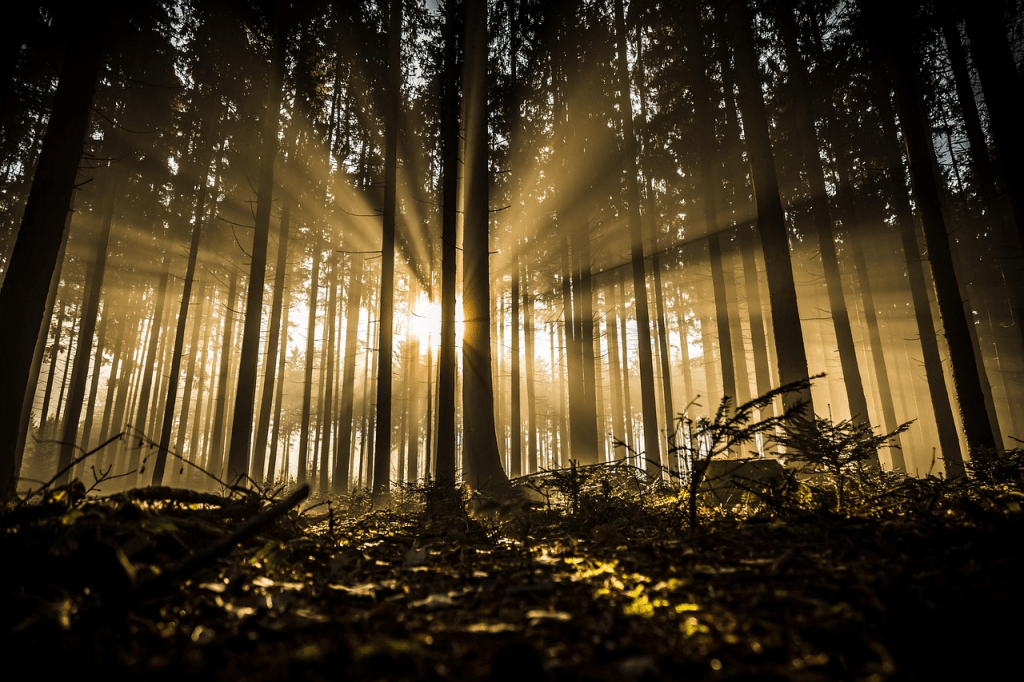
Er is nog een lange weg te gaan. We denken vaak dat groen gelijk staat aan natuur en het dus goed is voor het klimaat (en omgeving). Niets is minder waar. Veel mensen denken nog steeds dat een mooie bloementuin of tegelwippen in ruil voor een strak gazon hun bijdrage is aan meer natuur. Terwijl het meeste bloemzaad en bloembollen nog steeds geteeld worden met pesticiden en dus omgekeerd bijdraagt aan meer biodiversiteit (we creëren in feite dodelijke insectenvallen) en een strak gazon niets meer is dan een groene sahara, zeker als er vanalles opgegooid wordt om geen natuurlijke kruiden zoals klavers, paardenbloemen en derdelijke tussen het gras te zien opschieten. Monoculturen zoals uitgestrekte dennenbossen, indertijd allemaal geplant door mensen om economische redenen, zijn funest voor klimaatveiligheid, want zoveel meer vatbaar voor bosbranden dan een gemengd loofbos of een moerasgebied met vennen.
Het kan nooit goed zijn zeg je?
Het kan anders, en beter.
Er bestaan goede alternatieven die klimaatvriendelijk zijn en minder broeikgassen de lucht ingooien, zoals permacultuur en regeneratieve landbouw. We kunnen minder vlees eten. Biologisch bloemzaad en bloembollen kopen en het zaad ervan gebruiken voor de jaren nadien. Meer materiaal recycleren zodat we minder plastic en hout nodig hebben. Minder synthetische shampoo gebruiken, ik zeg maar wat. De mogelijkheden zijn ech eindeloos als je je erin begint te verdiepen. We moeten af van onze consumptiecultuur die funest is voor de planeet, die het klimaat helpt verzieken en klimaatverandering helpt versnellen.
Maar zoals gezegd, we zitten nu eenmaal in zelfdestructieve systemen opgesloten die we moeilijk kunnen of vooral niet willen doorbreken omdat we angstig zijn, omdat we het nu eenmaal anders gewoon zijn. De mens heeft algemeen schrik voor het onbekende. En het moest eens verkeerd uitdraaien.
Alsof dat nu nog niet zo is.
Als overheden en media al eens zouden beginnen met meer moeite te doen om de term klimaatveiligheid ingang te doen vinden. En beleidsmaatregelen meer aftoetsen aan klimaatveiligheid en mogelijke effecten voor mens, dier, natuur in het algemeen.
Media kunnen meer inzetten op het feit dat als we niet dringend ons gedrag veranderen, we ons steeds onveiliger zullen voelen, en we dit ook meer en meer effectief zullen worden. Wat we bedreigend vinden voor onszelf vinden we niet leuk. Iets dat we niet leuk vinden willen we uiteindelijk toch veranderen, wanneer het maar lang genoeg pijn doet. Wanneer een wondje niet geneest ga je uiteindelijk toch naar de dokter.
Het mag alleen niet te lang duren. Voor alles is er een punt waar omkeren niet meer mogelijk is.
Het klinkt ironisch,en ik vind het verschrikkelijk dat het gebeurt, maar ik ben blij dat de media zoveel en zo vaak berichten over de bosbranden deze zomer. Enerzijds omdat er zoveel bosbranden zijn, maar ook wel natuurlijk omdat er nog nooit zoveel mensen en hun huizen, hun dorpen, hun gemeenschappen, steden zelfs, rechtstreeks bedreigd zijn geweest als de afgelopen zomer.
Als we direct en rechtstreeks bedreigd worden zullen we het klimaat en klimaatverandering en ons gedrag ten aanzien hiervan steeds minder als vanzelfsprekend beschouwen, maar als iets dat onze toekomst, zelfs het bestaan van onze kinderen en hun voortbestaan bepaalt.
Misschien dat we dan meer zullen leven zoals altijd al de bedoeling was. Als deel van natuur, niet als de baas ervan, en ten koste ervan. Niet meer tegen, maar met natuur.
Tot het zover komt, laat natuur ons zien dat er met haar niet te spotten valt. En ze zal dit steeds sterker tonen wanneer we niet luisteren.
Tot het punt van onomkeerbaarheid.
Compromissen sluiten zijn nog mogelijk, er is nog tijd, maar niet lang meer. Uitstellen is geen optie meer. Tenzij het ons niet kan schelen dat we zonder pardon dezelfde weg opgaan als alles wat we reeds verloren.
Climate Safety
Last week I came across the term ‘climate safety’. I looked up what it means: it refers to extreme heat, flooding, and food security. Governments and experts use it as a broad security- and policy-related factor.
The term, though, is not yet widely used and doesn’t really seem to have taken root. When we talk about climate, it’s still mostly about climate change and what it means for society, for people and animals, for nature at large. We speak of climate adaptation, climate mitigation. And it leaves most people cold — too complicated, too hollow — and the climate deniers least of all — one day they’ll be a dying breed — people who claim the climate has fluctuated since the dawn of time; that there have been colder periods and warmer ones, so climate change is nothing new, and there’s no need to be so dramatic about it. And therefore no need to do anything about it either. It’ll blow over on its own.
What’s different from before is the powerful influence humans have on the climate. What’s different is that the climate change now underway is being pushed, hard, in the wrong direction by human hands — so that we are forever caught off guard by the speed at which things change.
Forest fires are as old as time. Their number and their intensity are not. Human behaviour — driven above all by economic and power-related decisions — is the biggest reason forest fires are growing more intense and more destructive.
Floods and storms are as old as time. Their number and their intensity are not. Human behaviour — driven above all by economic and power-related decisions — is the biggest reason storms and floods are fiercer than they used to be and cause more damage and more suffering.
And I could go on like this for a while.
Change that mindset, and the planet becomes livable again.
It isn’t simple. It never is. People are creatures of habit, and they don’t like giving up what they’ve gained — for better or worse. Not even when it means the eventual ruin of those very gains. Least of all when the effects of today’s behaviour only surface much further down the line.
Take ultra-processed food: a lot of what supermarkets sell is junk, and yet people eat it because it’s cheaper (understandable) and it takes less effort (sometimes, at least) than putting something healthier on the table. Or take smoking: there’s a direct link to lung cancer, and still people light up (though fewer and fewer).
There are countless examples of people persisting in destructive behaviour. Even when they know it will harm them in the end. Some will go on digging their own grave, singing and dancing all the while. That’s just how it is. I don’t understand it, but there it is.
Others — and, happily, a growing number of them — are slowly beginning to see the link between their own behaviour, and other people’s, and its effect on the climate.
There’s still a long way to go. We often think green equals nature, and so it must be good for the climate (and our surroundings). Nothing could be further from the truth. Many people still believe a pretty flower garden, or swapping paving stones for a manicured lawn, is their contribution to nature. When in fact most flower seeds and bulbs are still grown with pesticides and so achieve the opposite — they diminish biodiversity (we’re really just building lethal insect traps) — and a manicured lawn is nothing more than a green Sahara, especially once you douse it with whatever it takes to stop natural plants like clover and dandelions from daring to sprout between the blades. Monocultures like those sweeping pine forests — every one of them planted by people, for economic reasons — are disastrous for climate safety, because they catch fire so much more readily than a mixed deciduous wood or a marshland dotted with pools.
So there’s no getting it right, you say?
There is — differently, and better.
There are good alternatives — climate-friendly ones that put fewer greenhouse gases into the air — like permaculture and regenerative agriculture. We can eat less meat. Buy organic flower seeds and bulbs, and save their seed for the years that follow. Recycle more materials so we need less plastic and less wood. Use less synthetic shampoo — just to name something. The possibilities really are endless once you start looking into it. We have to move away from our culture of consumption, which is disastrous for the planet, which helps poison the climate and helps speed climate change along.
But as I said, we’re locked inside self-destructive systems that we find hard to break — or, above all, don’t want to break — because we’re afraid, because we’re simply used to things being the way they are. Humans, by and large, fear the unknown. And what if it all went wrong?
As if it isn’t already.
If only governments and the media would start making a bit more effort to give the term climate safety some traction. And measure their policies more against climate safety and the possible effects on people, animals, and nature at large.
The media could do more to drive home a simple point: if we don’t change our behaviour, and urgently, we’ll feel less and less safe — and increasingly we’ll actually be less safe. What we find threatening we don’t like. And what we don’t like, we do eventually want to change — once it hurts for long enough. When a small wound won’t heal, sooner or later you go to the doctor.
It just mustn’t take too long. For everything there’s a point beyond which there’s no turning back.
It sounds ironic, and I think it’s dreadful that it’s happening at all, but I’m glad the media have reported so much, and so often, on this summer’s wildfires. Partly because there are so many of them — but also, of course, because never before have so many people, their homes, their villages, their communities, even entire cities, been so directly under threat as they were this past summer.
When we’re directly, immediately threatened, we’ll come to take the climate, climate change, and our own behaviour towards it less and less for granted, and see it instead as something that shapes our future — even the existence of our children, and their survival.
Perhaps then we’ll live more the way it was always meant to be. As part of nature, not its master, and not at its expense. No longer against nature, but with it.
Until that day comes, let nature show us she is not to be trifled with. And she’ll show it ever more forcefully the longer we fail to listen.
Right up to the point of no return.
Compromise is still possible, there’s still time — but not for much longer. Putting it off is no longer an option. Unless we don’t care that we’ll go, without reprieve, the same way as everything we’ve already lost.
Seguridad climática
La semana pasada me topé por primera vez con el término «seguridad climática». Busqué qué significaba: se refiere al calor extremo, las inundaciones y la seguridad alimentaria. Los gobiernos y los expertos lo emplean como un amplio factor de seguridad y de política pública.
Sin embargo, el término aún no se usa demasiado y no parece haber arraigado del todo. Cuando hablamos de clima, casi siempre seguimos hablando de cambio climático y de lo que significa para la sociedad, para las personas y los animales, para la naturaleza en general. Hablamos de adaptación al clima, de mitigación. Y a la mayoría de la gente todo eso ni le va ni le viene: demasiado complicado, demasiado vacío; y menos aún a los negacionistas del clima —algún día serán una especie en extinción—, personas que sostienen que el clima ha sido variable desde el principio de los tiempos; que ha habido épocas más frías y también más cálidas, así que el cambio climático no tiene nada de nuevo y no hace falta ponerse tan dramáticos. Y que, por tanto, tampoco hace falta hacer nada al respecto. Ya pasará solo.
Lo que sí es distinto de antes es la fuerte influencia que ejerce el ser humano sobre el clima. Lo que es distinto es que el cambio climático en marcha está siendo empujado, con fuerza, en la dirección equivocada por la mano del hombre, de modo que la velocidad de los cambios nos toma una y otra vez por sorpresa.
Los incendios forestales son tan viejos como el mundo. Su número y su intensidad, no. El comportamiento humano —guiado sobre todo por decisiones económicas y de poder— es la mayor razón de que los incendios sean cada vez más intensos y más destructivos.
Las inundaciones y las tormentas son tan viejas como el mundo. Su número y su intensidad, no. El comportamiento humano —guiado sobre todo por decisiones económicas y de poder— es la mayor razón de que las tormentas y las inundaciones sean hoy más violentas que antes y causen más daños y más sufrimiento.
Y así podría seguir un buen rato.
Cambia ese enfoque y el planeta vuelve a ser habitable.
No es sencillo. Nunca lo es. Las personas somos animales de costumbres y no nos gusta renunciar a lo que hemos conseguido, para bien o para mal. Ni siquiera cuando eso significa, a la larga, la ruina de esas mismas conquistas. Y menos aún cuando los efectos de lo que hacemos hoy solo se ven mucho más adelante.
Piensa en la comida ultraprocesada: mucho de lo que venden los supermercados es basura y, aun así, la gente la come porque es más barata (comprensible) y cuesta menos esfuerzo (a veces, al menos) que poner algo más sano sobre la mesa. O piensa en el tabaco: hay una relación directa con el cáncer de pulmón y, aun así, la gente sigue encendiendo su cigarrillo (aunque cada vez menos).
Sobran los ejemplos que demuestran que el ser humano se empeña en un comportamiento destructivo. Incluso sabiendo que, al final, le hará daño. Algunos seguirán cavando su propia tumba cantando y bailando. Así son las cosas. No lo entiendo, pero es así.
Otros —y, por fortuna, un número cada vez mayor— empiezan poco a poco a ver la relación entre su propio comportamiento, y el de los demás, y su efecto sobre el clima.
Queda un largo camino por recorrer. A menudo pensamos que verde es sinónimo de naturaleza y que, por tanto, es bueno para el clima (y para el entorno). Nada más lejos de la realidad. Mucha gente todavía cree que un bonito jardín de flores, o cambiar las baldosas por un césped impecable, es su aportación a la naturaleza. Cuando en realidad la mayoría de las semillas y los bulbos se siguen cultivando con pesticidas y, por tanto, consiguen lo contrario: reducen la biodiversidad (en el fondo, montamos trampas mortales para insectos). Y un césped impecable no es más que un Sáhara verde, sobre todo cuando le echas de todo para que ni una sola planta silvestre —tréboles, dientes de león y demás— se atreva a asomar entre la hierba. Los monocultivos, como esos extensos bosques de pinos, plantados en su día por el ser humano por razones económicas, son nefastos para la seguridad climática, porque arden con mucha más facilidad que un bosque mixto de hoja caduca o una zona pantanosa salpicada de lagunas.
¿Que nunca se puede hacer bien, dices?
Se puede hacer de otra manera, y mejor.
Existen buenas alternativas, respetuosas con el clima y que emiten menos gases de efecto invernadero, como la permacultura y la agricultura regenerativa. Podemos comer menos carne. Comprar semillas y bulbos de flores ecológicos y guardar su semilla para los años siguientes. Reciclar más materiales para necesitar menos plástico y menos madera. Usar menos champú sintético, por decir algo. Las posibilidades son realmente infinitas en cuanto empiezas a informarte. Tenemos que abandonar nuestra cultura del consumo, nefasta para el planeta, que ayuda a envenenar el clima y a acelerar el cambio climático.
Pero, como decía, estamos encerrados en sistemas autodestructivos que nos cuesta romper —o, sobre todo, no queremos romper— porque tenemos miedo, porque, sencillamente, estamos acostumbrados a que sea así. El ser humano, en general, teme lo desconocido. ¿Y si sale mal?
Como si no estuviera saliendo mal ya.
Ojalá los gobiernos y los medios empezaran a esforzarse un poco más por dar cabida al término seguridad climática. Y a medir sus políticas en función de esa seguridad climática y de sus posibles efectos sobre las personas, los animales y la naturaleza en general.
Los medios podrían insistir más en una idea sencilla: si no cambiamos nuestro comportamiento, y con urgencia, nos sentiremos cada vez menos seguros, y cada vez lo estaremos menos de verdad. Lo que percibimos como una amenaza no nos gusta. Y aquello que no nos gusta acabamos queriendo cambiarlo, cuando duele el tiempo suficiente. Cuando una herida no cicatriza, tarde o temprano acabas yendo al médico.
Solo que no puede tardar demasiado. Para todo hay un punto a partir del cual ya no es posible dar marcha atrás.
Suena irónico, y me parece terrible que esté ocurriendo, pero me alegro de que los medios hayan informado tanto, y tan a menudo, sobre los incendios de este verano. En parte porque son muchísimos, pero también, claro, porque nunca antes tanta gente —sus casas, sus pueblos, sus comunidades, incluso ciudades enteras— se había visto tan directamente amenazada como este último verano.
Cuando la amenaza es directa e inmediata, dejaremos de dar por sentados el clima, el cambio climático y nuestro comportamiento frente a ellos, y empezaremos a verlos como algo que determina nuestro futuro; incluso la existencia de nuestros hijos y su propia supervivencia.
Puede que entonces vivamos más como siempre se pretendió que viviéramos. Como parte de la naturaleza, no como sus dueños, y no a su costa. Ya no contra la naturaleza, sino con ella.
Hasta que llegue ese día, dejemos que la naturaleza nos demuestre que no se juega con ella. Y lo hará con más fuerza cuanto más tardemos en escuchar.
Hasta el punto de no retorno.
Aún caben los compromisos, todavía hay tiempo, pero no por mucho más. Aplazar ya no es una opción. A menos que nos dé igual seguir, sin remedio, el mismo camino que todo lo que ya hemos perdido.
 Inside Out
Leave a comment